Did you know one entire chapter of the Bible is devoted to a food list? It’s Leviticus 11. Pork, rabbit, certain fish, vultures, locusts — why such a specific list, and what reason does God actually give? In this article we’ll walk through those rules in order, starting all the way back with Noah and ending with Moses, quoting the text directly so you can see exactly what it says.
A separate article covers what Jesus, Peter, and Paul said about this later, in the New Testament: New Testament Food Rules: What Did Jesus, Peter, and Paul Say?. We’re not defending or arguing against any particular tradition here — just laying out what the text itself says.
Quick summary: In Leviticus 11 and Deuteronomy 14, God gave Israel a list of what they could and couldn’t eat. Land animals needed a split hoof and had to chew the cud; water creatures needed fins and scales; birds, insects, and crawling things each got their own list. Blood and fat were off-limits too. The reason the text itself gives is holiness and being set apart — it never says “for your health.”
It starts with Noah, not Moses
The line between clean and unclean doesn’t begin with Moses. It shows up as early as the instructions God gave Noah about which animals to bring onto the ark (Genesis 7:2). After the flood, once Noah’s family stepped off the ark, God blessed them and said:
“Every moving thing that liveth shall be meat for you; even as the green herb have I given you all things. But flesh with the life thereof, which is the blood thereof, shall ye not eat.”
— Genesis 9:3-4 (KJV)
Up to that point, God had only given plants as food (Genesis 1:29). This is the first time animals are permitted as food for people at all. And right there, the rule about blood shows up — centuries before Moses was even born.
The rules God gave at Sinai
Here’s the short version first, verse by verse after that.
| Category | Clean (may eat) | Unclean (may not eat) |
|---|---|---|
| Land animals | Split hoof + chews the cud (ox, sheep, goat, deer…) | Camel, coney, hare, swine |
| Water creatures | Has fins and scales | Does not have both |
| Birds | Clean birds (Deuteronomy 14:11) | Eagle, vulture, raven, owl, stork, bat, etc. |
| Flying insects | Locust, bald locust, beetle, grasshopper | Other four-footed flying things |
| Crawling things | None | Weasel, mouse, lizard, chameleon, mole, etc. |
Several hundred years later, after Israel left Egypt, the Lord spoke to Moses and Aaron and told them to pass on to Israel exactly what could and couldn’t be eaten (Leviticus 11:1-2). He started with land animals:
“Speak unto the children of Israel, saying, These are the beasts which ye shall eat among all the beasts that are on the earth. Whatsoever parteth the hoof, and is clovenfooted, and cheweth the cud, among the beasts, that shall ye eat.”
— Leviticus 11:2-3 (KJV)
This was the first rule given to Israel: a split hoof and chewing the cud. Later, in his farewell speech, Moses repeated the same rule in Deuteronomy 14 and named the animals that qualified:
“These are the beasts which ye shall eat: the ox, the sheep, and the goat, The hart, and the roebuck, and the fallow deer, and the wild goat, and the pygarg, and the wild ox, and the chamois. And every beast that parteth the hoof, and cleaveth the cleft into two claws, and cheweth the cud among the beasts, that ye shall eat.”
— Deuteronomy 14:4-6 (KJV)
Some animals only meet one of the two marks. God names these as examples:
“Nevertheless these shall ye not eat of them that chew the cud, or of them that divide the hoof: as the camel, because he cheweth the cud, but divideth not the hoof; he is unclean unto you. And the coney, because he cheweth the cud, but divideth not the hoof; he is unclean unto you. And the hare, because he cheweth the cud, but divideth not the hoof; he is unclean unto you. And the swine, though he divide the hoof, and be clovenfooted, yet he cheweth not the cud; he is unclean to you. Of their flesh shall ye not eat, and their carcase shall ye not touch; they are unclean to you.”
— Leviticus 11:4-8 (KJV) (see also Deuteronomy 14:7-8)
God gives these examples right after stating the rule for clean animals. This is exactly where pork comes up — and “unhealthy” is nowhere in the text. The reason given is simply that the pig fails one of the two tests.
A note on the animal names: the list uses the English of the King James translators, writing in 1611. Scholars still debate exactly which modern species some Hebrew words refer to — “coney,” for instance, is usually understood as a rock hyrax, not the small rodent some readers picture. We’re not going to try to pin down modern biological species here; the text speaks in the categories of its own time.
Next, a bit more about land animals and their carcasses:
“The carcases of every beast which divideth the hoof, and is not clovenfooted, nor cheweth the cud, are unclean unto you: every one that toucheth them shall be unclean. And whatsoever goeth upon his paws, among all manner of beasts that go on all four, those are unclean unto you: whoso toucheth their carcase shall be unclean until the even. And he that beareth the carcase of them shall wash his clothes, and be unclean until the even: they are unclean unto you.”
— Leviticus 11:26-28 (KJV)
Here the rule widens — it’s not just about eating anymore, but about touching the carcass at all.
Then God moves on to creatures of the water:
“These shall ye eat of all that are in the waters: whatsoever hath fins and scales in the waters, in the seas, and in the rivers, them shall ye eat.”
— Leviticus 11:9 (KJV) (see also Deuteronomy 14:9)
Those are the ones permitted. For what isn’t, God said:
“And all that have not fins and scales in the seas, and in the rivers, of all that move in the waters, and of any living thing which is in the waters, they shall be an abomination unto you: They shall be even an abomination unto you; ye shall not eat of their flesh, but ye shall have their carcases in abomination. Whatsoever hath no fins nor scales in the waters, that shall be an abomination unto you.”
— Leviticus 11:10-12 (KJV) (see also Deuteronomy 14:10)
After land animals, God moves to water creatures. Notice the word changes here — from “unclean” to “abomination.” Missing either fins or scales seems to be enough to make something off-limits (that’s our reading of the text; the verse itself doesn’t spell out the “either/or” explicitly).
Now come the birds. It’s a long list — notice the bat shows up at the very end:
“And these are they which ye shall have in abomination among the fowls; they shall not be eaten, they are an abomination: the eagle, and the ossifrage, and the ospray, And the vulture, and the kite after his kind; Every raven after his kind; And the owl, and the night hawk, and the cuckow, and the hawk after his kind, And the little owl, and the cormorant, and the great owl, And the swan, and the pelican, and the gier eagle, And the stork, the heron after her kind, and the lapwing, and the bat.”
— Leviticus 11:13-19 (KJV) (see also Deuteronomy 14:12-18)
This comes right after the fish section. Deuteronomy 14:11 also adds, “Of all clean birds ye shall eat.” The bat is on this list (Leviticus 11:19; Deuteronomy 14:18) even though it isn’t technically a bird — a reminder that the text isn’t using our modern biological categories.
Next, small creatures with wings that also walk. Here the rule comes first, and the exception right after it:
“All fowls that creep, going upon all four, shall be an abomination unto you. Yet these may ye eat of every flying creeping thing that goeth upon all four, which have legs above their feet, to leap withal upon the earth; Even these of them ye may eat; the locust after his kind, and the bald locust after his kind, and the beetle after his kind, and the grasshopper after his kind. But all other flying creeping things, which have four feet, shall be an abomination unto you.”
— Leviticus 11:20-23 (KJV) (see also Deuteronomy 14:19-20)
Notice the pattern: a general rule, then an exception. Someone might ask, “insects have six legs, why does it say four?” That’s simply how the description was phrased in that era — it isn’t meant to map onto modern entomology.
Finally, creatures that crawl on the ground:
“These also shall be unclean unto you among the creeping things that creep upon the earth; the weasel, and the mouse, and the tortoise after his kind, And the ferret, and the chameleon, and the lizard, and the snail, and the mole. These are unclean to you among all that creep: whosoever doth touch them, when they be dead, shall be unclean until the even.”
— Leviticus 11:29-31 (KJV)
Verses 41-43 repeat the same point: don’t eat crawling things, and don’t make yourself unclean by touching them.
Does “unclean” mean “bad”?
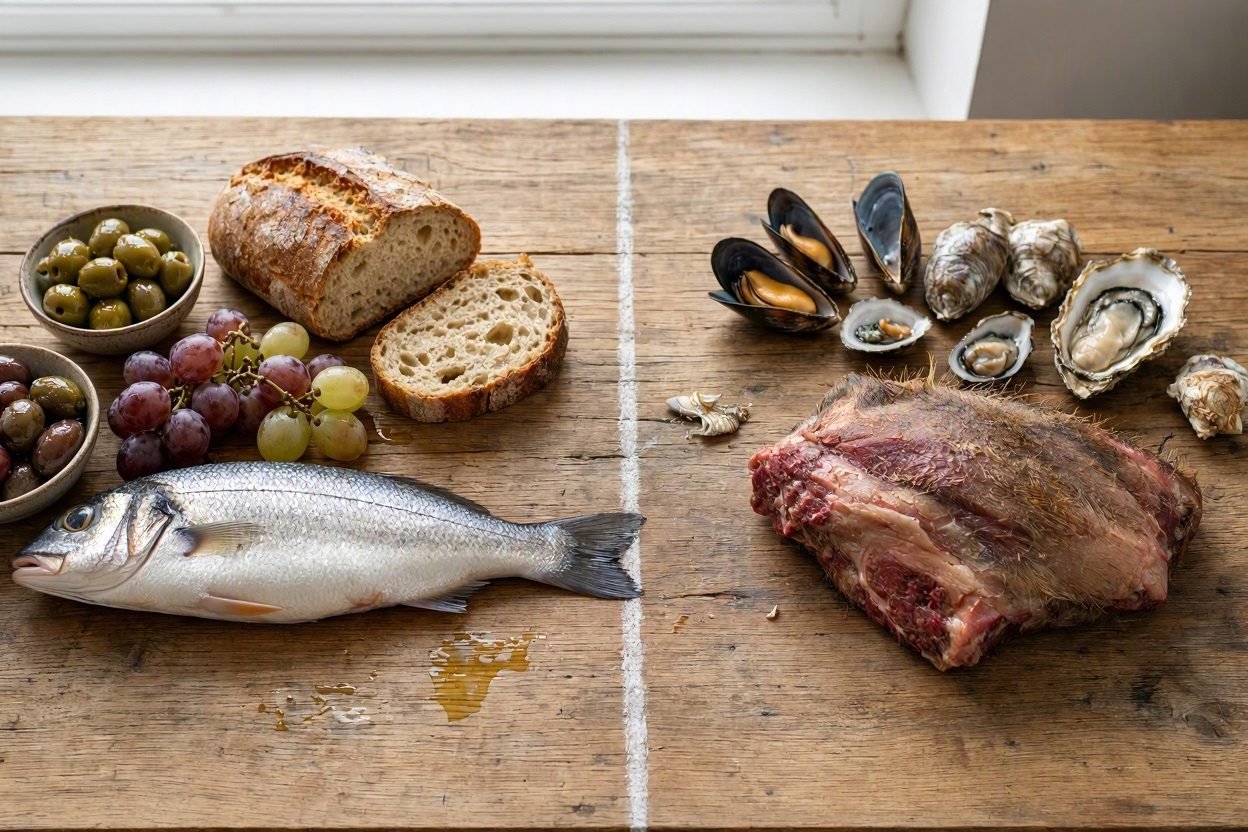
When people hear “unclean animal,” most assume it means poisonous, diseased, or simply bad for you. But the text itself never actually says that. In Leviticus 11, “unclean” is a category God gave Israel: what you may eat, what you may not, and what you may not even touch. The same passage also uses stronger language — “abomination” (Leviticus 11:11) and “any abominable thing” (Deuteronomy 14:3). How strong you take that word to be is something you can decide for yourself by reading the verses. The word has another sense too — becoming ceremonially unclean until evening just from touching a carcass (Leviticus 11:24-40). So “unclean” doesn’t only mean “forbidden to eat.”
Why did God give these rules at all?
A common claim is that God banned pork because it was unhealthy. But that reason simply isn’t in these verses. God states his own reason at the end of Leviticus 11:
“For I am the Lord your God: ye shall therefore sanctify yourselves, and ye shall be holy; for I am holy: neither shall ye defile yourselves with any manner of creeping thing that creepeth upon the earth. For I am the Lord that bringeth you up out of the land of Egypt, to be your God: ye shall therefore be holy, for I am holy.”
— Leviticus 11:44-45 (KJV)
That’s the reason God gives, right after laying out the whole list. The chapter then closes with this:
“This is the law of the beasts, and of the fowl, and of every living creature that moveth in the waters, and of every creature that creepeth upon the earth: To make a difference between the unclean and the clean, and between the beast that may be eaten and the beast that may not be eaten.”
— Leviticus 11:46-47 (KJV)
These are the closing words of Leviticus 11 — a summary of everything that came before. According to Deuteronomy 14:2, Israel was “an holy people unto the Lord.” Leviticus 20 ties the same distinction to Israel being set apart from the surrounding nations. After warning them not to live by the customs of the nations they were about to displace (20:23), God said:
“I am the Lord your God, which have separated you from other people. Ye shall therefore put difference between clean beasts and unclean, and between unclean fowls and clean: and ye shall not make your souls abominable by beast, or by fowl, or by any manner of living thing that creepeth on the ground, which I have separated from you as unclean. And ye shall be holy unto me: for I the Lord am holy, and have severed you from other people, that ye should be mine.”
— Leviticus 20:24-26 (KJV)
These rules were given specifically to Israel (Leviticus 11:2) — part of the covenant God made with them.
Bible scholars have also written about the possible reasoning behind these rules. A “commentary” is simply a scholar’s written explanation of a passage. The ESV Study Bible (a Protestant study Bible) notes on Leviticus 11 that clean animals may have symbolized Israel and unclean animals the surrounding nations; that forbidding blood connects to the broader prohibition on eating blood and touching carcasses; and that some forbidden animals may carry real health risks, even though the overall system isn’t actually built around health. That’s the commentary’s own view, not the Bible’s wording. What the text itself states as the reason is holiness, being set apart, and learning to tell the difference.
Dead animals, blood, and fat
At the end of the food-law section, Moses adds one more thing:
“Ye shall not eat of anything that dieth of itself: thou shalt give it unto the stranger that is in thy gates, that he may eat it; or thou mayest sell it unto an alien: for thou art an holy people unto the Lord thy God.”
— Deuteronomy 14:21 (KJV)
This closes out the food-law section. Notice foreigners are mentioned here too (Hebrew has two separate words for the two kinds of foreigner being discussed: the resident alien and the outsider). Leviticus 17 covers similar ground:
“And every soul that eateth that which died of itself, or that which was torn with beasts, whether it be one of your own country, or a stranger, he shall both wash his clothes, and bathe himself in water, and be unclean until the even: then shall he be clean.”
— Leviticus 17:15 (KJV)
This sits at the end of a chapter about blood. It’s natural to assume the reason is “it died without the blood being drained” — but Deuteronomy 14:21 only gives one reason: “thou art an holy people.” It doesn’t mention blood as the cause. The same verse closes with an unrelated rule:
“Thou shalt not seethe a kid in his mother’s milk.”
— Deuteronomy 14:21 (KJV)
Tithes are the next topic after this. This same rule appears again in Exodus 23:19 and 34:26, and in neither place does the text explain why — so any reason offered since then comes from people, not from the Bible itself. We shouldn’t present a human guess as if the Bible said it.
On the subject of blood, God is especially firm:
“And whatsoever man there be of the house of Israel, or of the strangers that sojourn among you, that eateth any manner of blood; I will even set my face against that soul that eateth blood, and will cut him off from among his people. For the life of the flesh is in the blood: and I have given it to you upon the altar to make an atonement for your souls: for it is the blood that maketh an atonement for the soul.”
— Leviticus 17:10-11 (KJV)
This sits inside a chapter about sacrifice. Blood carries this much weight because of its connection to atonement — making payment for sin. So this isn’t simply a dietary preference. Even game caught in hunting fell under the same rule:
“And whatsoever man there be of the children of Israel, or of the strangers that sojourn among you, which hunteth and catcheth any beast or fowl that may be eaten; he shall even pour out the blood thereof, and cover it with dust. For it is the life of all flesh; the blood of it is for the life thereof: therefore I said unto the children of Israel, Ye shall eat the blood of no manner of flesh: for the life of all flesh is the blood thereof: whosoever eateth it shall be cut off.”
— Leviticus 17:13-14 (KJV)
This shows the rule wasn’t limited to raised livestock — it applied to wild game brought home from a hunt too.
On the subject of fat, the Lord told Moses:
“Speak unto the children of Israel, saying, Ye shall eat no manner of fat, of ox, or of sheep, or of goat. And the fat of the beast that dieth of itself, and the fat of that which is torn with beasts, may be used in any other use: but ye shall in no wise eat of it. For whosoever eateth the fat of the beast, of which men offer an offering made by fire unto the Lord, even the soul that eateth it shall be cut off from his people.”
— Leviticus 7:23-25 (KJV)
This comes right after the instructions for peace offerings. Leviticus 3 makes the same point at the close of its own peace-offering section:
“The priest shall burn them upon the altar: it is the food of the offering made by fire for a sweet savour: all the fat is the Lord’s. It shall be a perpetual statute for your generations throughout all your dwellings, that ye eat neither fat nor blood.”
— Leviticus 3:16-17 (KJV)
“Throughout all your dwellings” and “perpetual statute” both point to a broad, lasting rule. Leviticus 7:23-25 is more specific, naming only ox, sheep, and goat fat — and the same passage also addresses blood (7:26-27). Whether this bans every fat in a modern recipe, the text doesn’t actually say; reading it that way would be claiming more than the verse states, in our view.
A few common questions
Why does the Bible forbid pork? The pig has a split hoof but doesn’t chew the cud (Leviticus 11:7; Deuteronomy 14:8). Health isn’t given as the reason anywhere in those verses.
Are shrimp and crab off-limits? Sea creatures without fins and scales are forbidden (Leviticus 11:10-12). We read shrimp and crab as falling into that category, though those specific words aren’t in the text.
Can you eat fish and locusts? Fish with fins and scales (Leviticus 11:9) and certain kinds of locust (11:21-22) were both permitted under the Old Testament law.
Where’s the rule about not boiling a young goat in its mother’s milk? Exodus 23:19; 34:26; and Deuteronomy 14:21. No reason is given.
Do Jewish people still follow these laws today? Yes — they’re central to the kosher tradition, though how strictly they’re observed varies between Jewish communities.
Conclusion
God gave these rules to keep his people holy and set apart from the nations around them. The rule about blood goes all the way back to Noah; the full dietary system came to Israel through Moses. So should Christians follow these laws today? To see what Jesus, Peter, and Paul said about that, and what different traditions believe today, read this article: New Testament Food Rules: What Did Jesus, Peter, and Paul Say?
Further reading
Click here to read more English articles: English Articles
Related articles:
- The Life of Moses: A Complete Biblical Biography
- Six Days of Labor, One Day of Rest
- Tithing in the Bible: What Does the Bible Actually Say?
Sources for this article
- Commentary opinions: ESV Study Bible, note on Leviticus 11.
- Deuteronomy 14:21 Hebrew terms: “Foreigner” entry in a Bible encyclopedia; Hebrew word-study references.
Disclaimers
On language: We wrote this article in plain English, meant to be understandable even for readers who’ve never opened a Bible before. This is a fresh English treatment of the subject, written independently rather than translated word-for-word from any other version of this article.
On storytelling: There’s no invented story in this article. The events involving Noah and Moses are told as the Bible presents them, with nothing imagined added. Scholarly opinions and our own observations are clearly marked as such, not presented as the Bible’s own words.
On the verses: The Bible verses in this article are quoted from the King James Version (KJV), a public-domain English translation first published in 1611. Next to each verse, we’ve explained the situation it was spoken in, in plain words for readers who don’t already know the Bible. To fully understand any verse, read the whole chapter it comes from in your own Bible. This article is not a complete or final explanation, and it isn’t arguing for or against any particular tradition — treat it as a study aid only.