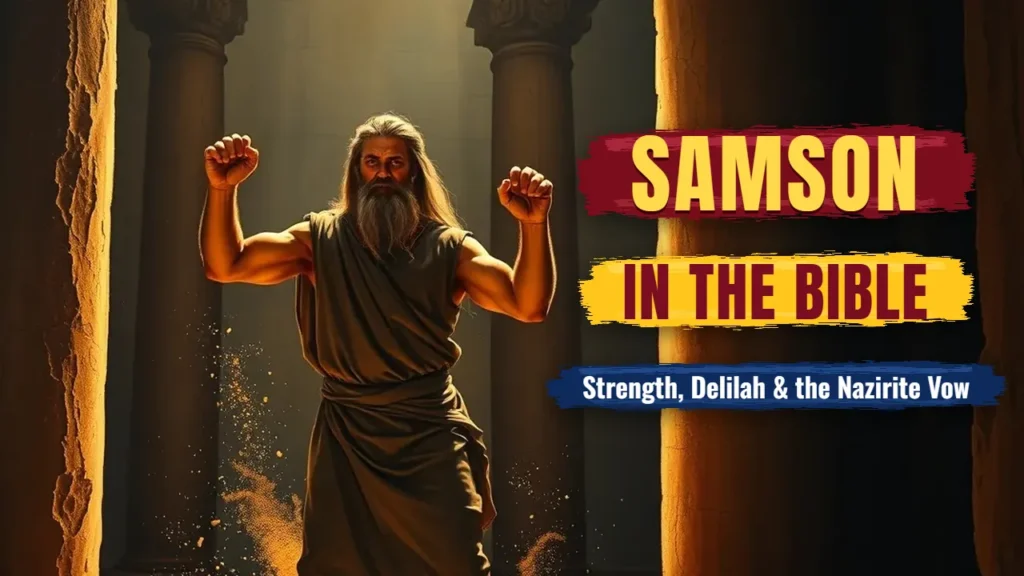
Introduction
Jake Reynolds grew up in a small town in West Texas, and by his junior year everybody in the county knew his name. He was the strongest kid anyone had seen on a high school football field. On Friday nights he would push through two blockers at once and still make the tackle. A college coach drove six hours to watch him play, offered him a scholarship, and gave him one piece of advice before he left home: stay away from the parties, stay away from the people who only want something from you, and remember that your strength is a gift from God, so take care of it. For a while Jake listened. Then the attention came, then the money, and he decided the rules were for other people. The friends who showed up when he started winning were the same people who sold him out when things went wrong. One injury and one bad night later, he was off the team, his health was wrecked, and everything was gone. Lying in a hospital bed, he started praying the same simple prayer his mother had taught him when he was a little boy.
About three thousand years ago, a man in Israel named Samson lived a life that followed almost the same path. Before he was even born, the angel of the LORD announced him. No one in the Bible is described as stronger. He tore a lion apart with his bare hands, killed a thousand soldiers with the jawbone of a donkey, and walked off with the gates of a city on his shoulders. But he never conquered his own weaknesses. In the end a woman named Delilah betrayed him, his enemies gouged out his eyes, and he spent his last days grinding grain in a Philistine prison. And that is where he finally called out to God again.
In this article we’ll walk through the story of Samson in the Bible from beginning to end, using Judges 13 through 16. We’ll answer the questions people ask most: who Samson was, what his name means, who his parents and his wife were, what a Nazirite vow is, what happened with Samson and Delilah, whether his strength was really in his hair, what he looked like, how he died, whether he was a real person, and what his life teaches us. When we say “the Bible says,” we’ll show you the verse. When we share history or scholars’ opinions, we’ll tell you right there that they’re not Scripture.
Samson at a glance:
- Name: Samson (Hebrew “Shimshon”). Many scholars think it means “sun-like” or “little sun”; the Bible doesn’t explain it.
- Tribe and hometown: the tribe of Dan, the town of Zorah (Judges 13:2).
- Parents: his father was Manoah (Judges 13:2). The Bible never gives his mother’s name.
- Wife: a Philistine woman from Timnath, whose name the Bible doesn’t give (Judges 14:1-2). The Bible never says he married Delilah (Judges 16:4).
- What made him different: a Nazarite to God from birth until death (Judges 13:5, 7).
- How long he led Israel: twenty years (Judges 15:20; 16:31).
- Death: he pulled down the temple of the Philistine god Dagon and died with the Philistine rulers (Judges 16:23-30).
- Burial: in his father Manoah’s tomb between Zorah and Eshtaol (Judges 16:31).
- In the New Testament: listed among the heroes of faith (Hebrews 11:32).
Questions in this article:
- Who was Samson in the Bible, and what does his name mean?
- When did Samson live? Who were the judges and the Philistines?
- Who were Samson’s parents?
- What is a Nazirite vow?
- Who was Samson’s wife? The lion, the honey, and the riddle
- The foxes and the jawbone: Samson’s revenge on the Philistines
- How did Samson carry the gates of Gaza?
- Samson and Delilah: what really happened?
- What did Samson look like? Was he a muscular giant?
- Was Samson’s strength really in his hair?
- How did Samson die?
- What does the New Testament say about Samson?
- Was Samson a good man or a bad man?
- Was Samson a real person?
- Samson and Delilah in art, music, and movies
- Samson’s story summary: Judges 13–16
- What can we learn from Samson’s life?
Who Was Samson in the Bible, and What Does His Name Mean?
Samson was one of the “judges” who led Israel in the centuries before Israel had a king. He came from the tribe of Dan and was set apart to God as a Nazarite from the day he was born. When the Spirit of the LORD came on him, he had strength no ordinary man had, and he used it to fight the Philistines, the nation that was ruling over Israel at the time. His story fills four chapters, Judges 13 through 16, which is more space than the Bible gives to any other judge.
Before Samson was born, the angel of the LORD told his mother what kind of life he would have:
“For, lo, thou shalt conceive, and bear a son; and no razor shall come on his head: for the child shall be a Nazarite unto God from the womb: and he shall begin to deliver Israel out of the hand of the Philistines.”
— Judges 13:5 (KJV)
The angel spoke these words to a woman who had never been able to have children. He told her she would have a son, that no razor should ever touch the boy’s head, and that he would belong to God in a special way from birth. Notice the last phrase: he would “begin” to deliver Israel. Samson would not finish the job. Full victory over the Philistines came many years later, under Samuel and David (1 Samuel 7:13; 2 Samuel 5:17-25).
What does the name Samson mean? The Bible doesn’t explain his name. In Hebrew it’s “Shimshon.” Most language scholars connect it with “shemesh,” the Hebrew word for “sun,” so it may mean “sun-like,” “like the sun,” or “little sun.” Interestingly, a town called Beth-shemesh (“house of the sun”) sat just a few miles from Samson’s hometown of Zorah. This is a scholarly explanation, not a statement from the Bible.
Samson or Sampson? If you’ve seen both spellings, the Bible’s spelling is “Samson.” “Sampson” is a later English variant that shows up as a family name, but every major English Bible, including the KJV, spells the biblical figure “Samson.”
When Did Samson Live? Who Were the Judges and the Philistines?
Who were the judges? After Moses and Joshua died, Israel went through a long stretch with no king. Again and again the people turned away from God and worshiped the gods of the nations around them. God would then let an enemy nation oppress them. When they cried out, God raised up a leader to rescue them. These leaders are called “judges,” though most of them were more like military deliverers than courtroom judges. Gideon, Deborah, and Jephthah were judges, and so was Samson. The book of Judges sums up that whole era in a single sentence:
“In those days there was no king in Israel: every man did that which was right in his own eyes.”
— Judges 21:25 (KJV)
This is the very last verse of the book of Judges, and the same line appears earlier in Judges 17:6. It describes a time when people didn’t live by God’s word but by whatever seemed right to them. And here’s the striking thing: Samson’s own life follows that same pattern. Over and over, his decisions come down to “she pleaseth me well” (Judges 14:3). Even the man God used to rescue His people was full of the weaknesses of his age.
Who were the Philistines? The Philistines lived along the Mediterranean coast, west of Israel. They had five main cities, Gaza, Ashdod, Ashkelon, Gath, and Ekron, each ruled by its own lord (Joshua 13:3). Their chief god was Dagon (Judges 16:23). Unlike the Israelites, they didn’t practice circumcision, which is why the Bible keeps calling them “the uncircumcised.” According to historians (this is not from the Bible), the Philistines were part of the “Sea Peoples” who came from the Aegean region, around Greece and Crete, and settled on this coast in the 1100s BC. Historians also say the name “Palestine” comes from the word “Philistine,” through Greek and Latin.
Samson’s story opens like this: “And the children of Israel did evil again in the sight of the LORD; and the LORD delivered them into the hand of the Philistines forty years” (Judges 13:1). In the stories of the other judges, the people cry out to God for help. In Samson’s story they don’t. Israel seems to have settled into living under Philistine rule, and as we’ll see, the men of Judah even turn Samson over to the Philistines themselves.
When? (Historical estimate, not from the Bible.) Most scholars place the period of the judges at roughly 1200 to 1050 BC, so Samson probably lived in the 1100s or early 1000s BC. The Bible doesn’t give an exact date.
Who Were Samson’s Parents?
The Bible introduces Samson’s father by name:
“And there was a certain man of Zorah, of the family of the Danites, whose name was Manoah; and his wife was barren, and bare not.”
— Judges 13:2 (KJV)
This verse sets the scene. Manoah was an ordinary man from the tribe of Dan who lived in Zorah, and his wife couldn’t have children. In that culture, being childless was a deep sorrow and often a source of shame. Zorah was a town west of Jerusalem, where the hill country slopes down toward the coastal plain, right on the edge of Philistine territory (that’s historical geography, not a verse).
What was Samson’s mother’s name? The Bible never tells us. She’s simply called “the woman” or “Manoah’s wife.” (Jewish tradition, not the Bible:) the Talmud, an ancient collection of Jewish teaching, gives her name as Hazzelelponi (also spelled Zelelponith) in a passage called Bava Batra 91a. That’s a later tradition, not part of Scripture.
What’s remarkable is that the angel of the LORD appeared first to her, not to her husband. She ran and told Manoah, and Manoah prayed that the “man of God” would come back and teach them how to raise the boy (Judges 13:6-8). God answered that prayer. When Manoah asked the angel his name, he got this reply: “Why askest thou thus after my name, seeing it is secret?” (Judges 13:18). (Scholars note that the Hebrew word translated “secret” here can also mean “wonderful,” that is, beyond human understanding.) Then the angel went up toward heaven in the flame of the altar fire (Judges 13:20).
Manoah panicked: “We shall surely die, because we have seen God” (Judges 13:22). His wife answered him with calm good sense:
“And Manoah said unto his wife, We shall surely die, because we have seen God. But his wife said unto him, If the LORD were pleased to kill us, he would not have received a burnt offering and a meat offering at our hands, neither would he have shewed us all these things, nor would as at this time have told us such things as these.”
— Judges 13:22-23 (KJV)
Manoah was terrified because he believed no one could see God and live. His wife reasoned it through: if God wanted to kill them, He wouldn’t have accepted their offering, and He wouldn’t have told them about the son who was coming. Her faith was steadier than her husband’s in that moment. Many commentators believe “the angel of the LORD” in passages like this wasn’t an ordinary angel but God Himself appearing in human form, which is why Manoah said “we have seen God.” That’s a commentators’ interpretation.
Samson’s parents are a good example for parents today. Before their son was even born, they asked God how to raise him.
What Is a Nazirite Vow?
You can’t understand Samson’s story without understanding the word “Nazirite” (the KJV spells it “Nazarite”). It comes from a Hebrew word meaning “separated” or “consecrated.” Under the law God gave through Moses, any man or woman who wanted to be devoted to God in a special way for a period of time could take a Nazirite vow (Numbers 6:2). For as long as the vow lasted, they had to keep three rules:
- No wine or strong drink, and nothing that comes from grapes, not even raisins or grape juice (Numbers 6:3-4).
- No haircut. No razor could touch their head (Numbers 6:5).
- No contact with a dead body, not even for a father, mother, brother, or sister (Numbers 6:6-7).
Here’s the rule about hair:
“All the days of the vow of his separation there shall no razor come upon his head: until the days be fulfilled, in the which he separateth himself unto the LORD, he shall be holy, and shall let the locks of the hair of his head grow.”
— Numbers 6:5 (KJV)
God gave these instructions to Israel through Moses. Long, uncut hair was a visible sign that the person belonged to God. Normally a Nazirite vow lasted for a limited time. When it ended, the person shaved their head and offered sacrifices (Numbers 6:13-18).
What made Samson different: Samson didn’t choose this vow. God chose him before he was born, and it was for life. The angel told his mother the boy would be “a Nazarite to God from the womb to the day of his death” (Judges 13:7). That’s why even his mother, while pregnant, was told not to drink wine or strong drink or eat anything unclean (Judges 13:4, 14). Only a few people in the Bible are described this way. Hannah promised that no razor would touch her son Samuel’s head (1 Samuel 1:11), and the angel said John the Baptist “shall drink neither wine nor strong drink” (Luke 1:15).
Is a Nazirite the same as a Nazarene? No. A Nazirite is someone set apart to God by a vow. A Nazarene is someone from the town of Nazareth. Jesus is called “Jesus of Nazareth” or “the Nazarene” because He grew up there. The Bible never says Jesus took a Nazirite vow, and the Gospels even mention that He drank wine (Matthew 11:19). The two words sound alike in English, but they mean different things.
Keep these three rules in mind as you read Samson’s story, because he seems to cross every one of them, one step at a time: he touched a lion’s carcass, he threw a drinking feast, and finally he gave away the secret of his hair.
Who Was Samson’s Wife? The Lion, the Honey, and the Riddle
A lot of people search for “Samson’s wife’s name.” According to the Bible, Samson married a young Philistine woman from a town called Timnath (also spelled Timnah). But the Bible never gives her name. She’s only called “a woman in Timnath” or “Samson’s wife.” Many people assume Delilah was Samson’s wife, but the Bible never says he married her. It only says “he loved a woman in the valley of Sorek, whose name was Delilah” (Judges 16:4).
How far was Timnah from Samson’s home? (Historical geography, not from the Bible.) Samson’s hometown of Zorah, the town of Timnah, and the Valley of Sorek where Delilah lived were all close together. Archaeologists identify Timnah with a site called Tel Batash, in the Sorek Valley about 4 miles (roughly 7 km) west of Zorah. In Samson’s day this valley was a border zone between the Israelite hill country and the Philistine plain. Samson didn’t have to travel far to run into Philistines. The Bible itself reminds us that “at that time the Philistines had dominion over Israel” (Judges 14:4).
Samson saw a young Philistine woman in Timnah and asked his parents to get her for him as a wife (Judges 14:1-2). Here’s how that conversation went:
“Then his father and his mother said unto him, Is there never a woman among the daughters of thy brethren, or among all my people, that thou goest to take a wife of the uncircumcised Philistines? And Samson said unto his father, Get her for me; for she pleaseth me well.”
— Judges 14:3 (KJV)
You can feel his parents’ pain. They didn’t want a daughter-in-law from the nation that was oppressing God’s people and didn’t know God. The law of Moses had warned Israel not to intermarry with nations that worshiped other gods, “for they will turn away thy son from following me” (Deuteronomy 7:4). But Samson’s only answer was “she pleaseth me well.” Scholars point out that the Hebrew literally says “she is right in my eyes,” which echoes the book’s theme verse: “every man did that which was right in his own eyes” (Judges 21:25). Then the next verse adds something surprising:
“But his father and his mother knew not that it was of the LORD, that he sought an occasion against the Philistines: for at that time the Philistines had dominion over Israel.”
— Judges 14:4 (KJV)
This is a note from the writer of Judges, stepping into the story to explain what was going on behind the scenes. It doesn’t say Samson’s desire was good, and it doesn’t say God made him want this woman. It says that God used even this self-willed decision as an opportunity to confront the Philistines. God can work His plan through human weakness. That doesn’t make the wrong thing right, but it means God’s plan doesn’t stop.
The lion: On the way to Timnah with his parents, near the vineyards of Timnath, a young lion came roaring at Samson (Judges 14:5).
“And the Spirit of the LORD came mightily upon him, and he rent him as he would have rent a kid, and he had nothing in his hand: but he told not his father or his mother what he had done.”
— Judges 14:6 (KJV)
This is the first time the Bible shows Samson’s strength in action. Notice where it came from: “the Spirit of the LORD came mightily upon him.” He tore the lion apart as easily as someone might tear a young goat, with no weapon at all. And he didn’t tell his parents. A Nazirite was supposed to stay away from death, and he may not have wanted them to know.
Vineyards and a carcass: Many commentators note that the mention of “vineyards” isn’t accidental. A Nazirite had no business hanging around vineyards. Later, when Samson came back to marry the woman, he turned aside to look at the lion’s carcass and found a swarm of bees and honey inside it. He scooped the honey out with his hands, ate it as he walked, and gave some to his parents, “but he told not them that he had taken the honey out of the carcase of the lion” (Judges 14:8-9). The law said touching the carcass of a dead animal made a person unclean (Leviticus 11:39). Commentators disagree about whether the Nazirite rule against coming near “a dead body” (Numbers 6:6) covered animal carcasses or only human bodies. Either way, Samson kept it secret, which suggests he knew he’d done something his parents wouldn’t approve of.
The feast and the riddle: Samson threw a seven-day wedding feast in Timnah, “for so used the young men to do” (Judges 14:10). (Scholars note that the Hebrew word for this feast, “mishteh,” comes from the verb “to drink,” so it was likely a drinking party.) The Philistines assigned thirty young men to be his companions. Samson made them a bet: if they could solve his riddle within the seven days, he’d give them thirty linen garments and thirty changes of clothes. If they couldn’t, they’d owe him the same. Here was the riddle:
“And he said unto them, Out of the eater came forth meat, and out of the strong came forth sweetness. And they could not in three days expound the riddle.”
— Judges 14:14 (KJV)
“The eater” and “the strong” was the lion, and the “meat” and “sweetness” was the honey. Since no one but Samson knew about the lion, no one could solve it. By the seventh day the young men threatened Samson’s bride: find out the answer, or we’ll burn you and your father’s house (Judges 14:15). She wept in front of Samson for the rest of the feast, until he finally told her, and she told her people (Judges 14:16-17).
This scene foreshadows what will happen later with Delilah. A woman weeps and tells him, “Thou dost but hate me, and lovest me not” (Judges 14:16), she keeps pressing him day after day, and Samson gives up his secret. That weakness shows up twice in his life.
Samson was furious with the men who solved it: “If ye had not plowed with my heifer, ye had not found out my riddle” (Judges 14:18). In plain English: if you hadn’t threatened and pressured my wife, you never would have figured it out. Then the Spirit of the LORD came on him. He went down to Ashkelon, another Philistine city, killed thirty Philistine men, took their clothes, and paid off the bet (Judges 14:19). Then he went home angry, and his wife was given to the man who had been his best man (Judges 14:20).
Why did Samson kill 30 men? People ask this a lot. The text says the Spirit of the LORD came on him (Judges 14:19), so the Bible presents it as part of God’s fight against the nation oppressing Israel. At the same time, Samson’s own motives were plainly mixed. He was angry, he’d been humiliated, and he owed a debt. The Bible tells it honestly without calling his anger good.
The Foxes and the Jawbone: Samson’s Revenge on the Philistines
Some time later, at wheat harvest, Samson went to visit his wife, bringing a young goat as a gift. Her father wouldn’t let him in. He’d assumed Samson hated her and had given her to another man. “Is not her younger sister fairer than she? take her, I pray thee, instead of her,” he said (Judges 15:2).
Samson’s reply shows exactly what was driving him: “Now shall I be more blameless than the Philistines, though I do them a displeasure” (Judges 15:3). He caught three hundred foxes, tied them tail to tail in pairs, fastened a torch between each pair of tails, lit the torches, and turned them loose in the Philistines’ grain fields. The fire burned the standing grain, the bundled sheaves, the vineyards, and the olive groves (Judges 15:4-5). (Scholars note that the Hebrew word “shu’al” can mean foxes or jackals; jackals travel in packs and would have been easier to catch in large numbers.) For people who lived off the land, this was a devastating blow.
Then the cycle of revenge spun faster. The Philistines burned Samson’s wife and her father to death (Judges 15:6). Ironically, the very fate she had tried to escape by betraying Samson’s riddle came on her anyway. Samson struck back and slaughtered many of them, then went to live in a cave in the rock of Etam (Judges 15:7-8).
His own people hand him over: The Philistines invaded Judah looking for Samson. And the men of Judah, instead of standing with him, sent three thousand men to tie him up. “Knowest thou not that the Philistines are rulers over us?” they asked him (Judges 15:11). Samson’s answer: “As they did unto me, so have I done unto them” (Judges 15:11). Samson made them promise not to kill him themselves, and he let his own people tie him with two new ropes and hand him to the enemy (Judges 15:12-13). Israel had grown so used to foreign rule that they preferred to surrender their deliverer rather than risk a fight.
The jawbone: When they reached a place called Lehi, the Philistines came at him shouting.
“And when he came unto Lehi, the Philistines shouted against him: and the Spirit of the LORD came mightily upon him, and the cords that were upon his arms became as flax that was burnt with fire, and his bands loosed from off his hands.”
— Judges 15:14 (KJV)
The new ropes snapped like burned thread. Samson grabbed “a new jawbone of an ass” and killed a thousand men with it (Judges 15:15). Then he made up a little victory song: “With the jawbone of an ass, heaps upon heaps, with the jaw of an ass have I slain a thousand men” (Judges 15:16). Commentators note the word “new”: it was the jawbone of a recently dead donkey, so it wasn’t dry and brittle. Some also point out that, once again, Samson picked up part of a carcass.
Why did Samson kill 1,000 men? This was battle. A Philistine army had come into Judah specifically to capture him (Judges 15:9-10), and the Bible again says the Spirit of the LORD gave him the strength. In the book of Judges, the Philistines are the oppressors and Samson is the one God raised up to “begin to deliver Israel” (Judges 13:5).
After the battle, Samson was dying of thirst. That’s when we hear his first recorded prayer:
“And he was sore athirst, and called on the LORD, and said, Thou hast given this great deliverance into the hand of thy servant: and now shall I die for thirst, and fall into the hand of the uncircumcised?”
— Judges 15:18 (KJV)
The man who had just defeated a thousand soldiers couldn’t survive without a drink of water. In this prayer, for the first time, Samson calls himself God’s “servant” and admits that the victory came from God, not from himself. God split open a hollow place at Lehi and water came out. Samson drank and revived, and he named the spring En-hakkore, which scholars translate as “the spring of the one who called” (Judges 15:19). Then the Bible notes: “he judged Israel in the days of the Philistines twenty years” (Judges 15:20).
How Did Samson Carry the Gates of Gaza?
Chapter 16 opens on a sad note. Samson went to Gaza, the leading Philistine city, and spent the night with a prostitute there (Judges 16:1). A man consecrated to God and a judge of Israel, sleeping with a prostitute in the enemy’s capital, shows how far his moral life had slipped. The people of Gaza found out he was there and waited all night at the city gate, planning to kill him at dawn (Judges 16:2).
“And Samson lay till midnight, and arose at midnight, and took the doors of the gate of the city, and the two posts, and went away with them, bar and all, and put them upon his shoulders, and carried them up to the top of an hill that is before Hebron.”
— Judges 16:3 (KJV)
City gates in that time were heavy wooden doors hung on posts and locked with a strong crossbar. They were the city’s main defense. Samson ripped out the doors, the posts, and the bar, put the whole thing on his shoulders, and carried it away. Losing its gates left a city exposed and humiliated.
How heavy were the gates of Gaza? How far did he carry them? (Estimate, not from the Bible.) The Bible doesn’t give a weight, and no one knows how big Gaza’s gate was. The numbers you’ll see online are guesses. Hebron is roughly 37 miles (about 60 km) from Gaza and sits high in the hill country, around 3,000 feet up. Some commentators think “an hill that is before Hebron” means a hill facing toward Hebron, not a hill right next to it. Either way, it was an astonishing display of strength.
Notice what’s missing in this scene: the Bible doesn’t say the Spirit of the LORD came on him here. God was still letting him have his strength, but Samson used it to get himself out of trouble he’d walked into on his own. He seems to have started believing his strength was his own. That attitude would cost him everything in the very next scene.
Samson and Delilah: What Really Happened?
This is the part of Samson’s story everyone knows.
“And it came to pass afterward, that he loved a woman in the valley of Sorek, whose name was Delilah. And the lords of the Philistines came up unto her, and said unto her, Entice him, and see wherein his great strength lieth, and by what means we may prevail against him, that we may bind him to afflict him: and we will give thee every one of us eleven hundred pieces of silver.”
— Judges 16:4-5 (KJV)
Delilah is the only woman in Samson’s story whose name we’re given. His mother, his wife, and the woman in Gaza are all unnamed. The Valley of Sorek runs right past Samson’s hometown of Zorah, between Israelite and Philistine territory. Scholars say “Sorek” means something like “choice vine,” and some commentators notice that once again the Nazirite is drifting into vineyard country.
Was Delilah a Philistine? The Bible doesn’t say what nation she belonged to. Many people assume she was a Philistine, but that isn’t in the text. Some scholars think she may even have been an Israelite. The only thing the Bible makes clear is that she sold Samson out for money. There are also different opinions about what the name “Delilah” means (suggestions include “delicate,” “weak,” or “flirtatious”), and none of them is certain.
Was Samson married to Delilah? No. The Bible says he “loved” her, but it never says they were married.
How much money was it? (Estimate, not from the Bible.) Each of the Philistine lords offered eleven hundred pieces of silver, and there were five lords (Joshua 13:3), so that’s 5,500 pieces. If these were shekels of roughly 11 grams each, that’s about 130 pounds of silver. Scholars often compare it with Judges 17:10, where a priest is offered “ten shekels of silver by the year.” By that measure, Delilah was offered several hundred years’ worth of wages. It was a staggering amount.
Delilah didn’t hide what she was doing. She asked him straight out: “Tell me, I pray thee, wherein thy great strength lieth, and wherewith thou mightest be bound to afflict thee” (Judges 16:6). Three times Samson lied to her:
- First: “If they bind me with seven green withs that were never dried,” meaning fresh bowstrings or cords (Judges 16:7). She tied him up, the men hiding in the room were ready, and Samson snapped the cords “as a thread of tow is broken when it toucheth the fire” (Judges 16:9).
- Second: new ropes that had never been used (Judges 16:11). He broke them off his arms like thread.
- Third: “If thou weavest the seven locks of my head with the web,” meaning weave his hair into the fabric on a loom (Judges 16:13). She did, and he woke up and pulled the whole loom loose. Now he was getting dangerously close to the truth, because this lie was about his hair.
Every time, Delilah called out, “The Philistines be upon thee, Samson,” and every time there were Philistines waiting. After the first round, Samson had to know she was trying to hand him over. He stayed anyway. Then she kept pushing, every single day:
“And she said unto him, How canst thou say, I love thee, when thine heart is not with me? thou hast mocked me these three times, and hast not told me wherein thy great strength lieth. And it came to pass, when she pressed him daily with her words, and urged him, so that his soul was vexed unto death;”
— Judges 16:15-16 (KJV)
Delilah used almost the same line his wife had used years earlier. Back then his wife said, “Thou dost but hate me, and lovest me not” (Judges 14:16). Now Delilah says, “How canst thou say, I love thee, when thine heart is not with me?” The tears, the guilt, the pressure came day after day, until Samson was “vexed unto death.” The man who had beaten a thousand soldiers couldn’t hold out against the words of one woman. She had tried to betray him three times, and he still couldn’t walk away. Finally he told her everything:
“That he told her all his heart, and said unto her. There hath not come a razor upon mine head; for I have been a Nazarite unto God from my mother’s womb: if I be shaven, then my strength will go from me, and I shall become weak, and be like any other man.”
— Judges 16:17 (KJV)
This time Samson told the truth, and he knew exactly what would happen if his hair was cut. The secret of his strength was the Nazirite vow God had placed on him from birth. He handed the last sign of that vow to a woman he knew was selling him out.
“And she made him sleep upon her knees; and she called for a man, and she caused him to shave off the seven locks of his head; and she began to afflict him, and his strength went from him. And she said, The Philistines be upon thee, Samson. And he awoke out of his sleep, and said, I will go out as at other times before, and shake myself. And he wist not that the LORD was departed from him.”
— Judges 16:19-20 (KJV)
Delilah could tell that this time he meant it, so she called the Philistine lords, and they came with the money in their hands (Judges 16:18). She lulled him to sleep on her lap and had a man shave off his seven locks. Samson woke up thinking, “I’ll just shake myself free like always.” But the most heartbreaking line in the whole story follows: “he wist not that the LORD was departed from him.” He didn’t even know God had left him. That can happen to any of us. We drift away from God so gradually that we don’t notice we’re gone.
“But the Philistines took him, and put out his eyes, and brought him down to Gaza, and bound him with fetters of brass; and he did grind in the prison house.”
— Judges 16:21 (KJV)
The Philistines gouged out his eyes, took him to Gaza in bronze shackles, and put him to work grinding grain in the prison. His eyes had led him to Timnah, to the woman in Gaza, and to Delilah, and now they were gone. Historians say grinding grain at a mill was normally work for slaves and women, so forcing a famous strongman to do it was meant as public humiliation. Then comes one small sentence full of hope: “Howbeit the hair of his head began to grow again after he was shaven” (Judges 16:22).
What Did Samson Look Like? Was He a Muscular Giant?
Paintings and movies almost always show Samson as a huge, muscle-bound giant. But the Bible says nothing about his height, his build, or his looks. It only tells us that as he grew up, “the child grew, and the LORD blessed him” (Judges 13:24), and that he had long hair braided into seven locks (Judges 16:13, 19).
Many commentators think a few details in the story suggest that Samson’s strength wasn’t obvious just from looking at him:
- The Philistine lords paid Delilah to find out “wherein his great strength lieth” (Judges 16:5). If he had simply looked like the strongest man alive, there would have been no mystery to solve.
- Samson himself said that without his hair he would “be like any other man” (Judges 16:17). His strength was not ordinary human strength.
- Every time he did something extraordinary, the Bible says the Spirit of the LORD came upon him (Judges 14:6, 19; 15:14).
He may well have been stronger than average, but the Bible doesn’t say so. The points above are commentators’ observations, not statements of Scripture. What the Bible makes clear is that the source of his unusual strength wasn’t his muscles. It was God.
Was Samson black? This question shows up in searches too. The Bible doesn’t describe his skin color or appearance at all. He was an Israelite from the tribe of Dan living in the ancient Near East, and any picture you’ve seen of him is an artist’s imagination.
Was Samson’s Strength Really in His Hair?
Many people ask about “the secret of Samson’s hair.” Lots of people think his strength was literally stored in his hair, as if it were some kind of magic. That’s not what the Bible teaches. Here’s what it actually says:
- The strength came from the Spirit of the LORD. When he tore the lion apart (Judges 14:6), in Ashkelon (14:19), and when he snapped the ropes at Lehi (15:14), every time, the Bible says the Spirit of the LORD came upon him. The Spirit began to move him when he was still young (13:25).
- The hair was a sign. His hair was the visible sign of his Nazirite commitment to God. Cutting it meant the vow was completely broken.
- His strength left because God left. “He wist not that the LORD was departed from him” (16:20). That’s the real reason his strength disappeared. The haircut was simply the last step in a long slide.
- When his hair grew back, his strength didn’t return on its own. His hair began to grow again in 16:22, but his strength only came back after he cried out to God, “strengthen me, I pray thee, only this once” (16:28).
In other words, Samson’s strength always came from God. His hair was the sign of a promise to stay devoted to God. Samson kept treating that promise lightly, one small compromise at a time, until he finally handed the sign itself to a woman who was betraying him. God’s gifts are never really ours to keep apart from Him. They depend on our relationship with the One who gives them.
How Did Samson Die?
The Philistine lords held a huge sacrifice and celebration in the temple of their god Dagon to celebrate capturing their enemy. They sang, “Our god hath delivered Samson our enemy into our hand” (Judges 16:23-24). This wasn’t just a contest between Samson and the Philistines anymore. It had become a question of who was greater: Dagon, or the God of Israel. When the crowd was in high spirits, they brought Samson out of prison to entertain them and stood him between the pillars (Judges 16:25). The temple was packed with men and women. All the Philistine lords were there, and about three thousand people were watching from the roof (Judges 16:27). Samson asked the boy who was leading him by the hand to let him feel the pillars that held up the building so he could lean on them (Judges 16:26). Then came his last prayer:
“And Samson called unto the LORD, and said, O Lord GOD, remember me, I pray thee, and strengthen me, I pray thee, only this once, O God, that I may be at once avenged of the Philistines for my two eyes.”
— Judges 16:28 (KJV)
This is Samson’s second and last recorded prayer in the Bible. Blind, chained, and mocked by his enemies, he begged God, “remember me.” Even in this prayer his old nature shows: he wants to be “avenged” for “my two eyes.” His motives may not have been completely pure. Yet God heard him. For the first time, the blind Samson was depending entirely on God and not on his own eyes. People often call this “Samson’s prayer for strength,” and it’s a reminder that no one has fallen too far to call on God.
“And Samson said, Let me die with the Philistines. And he bowed himself with all his might; and the house fell upon the lords, and upon all the people that were therein. So the dead which he slew at his death were more than they which he slew in his life.”
— Judges 16:30 (KJV)
Samson took hold of the two middle pillars, one with his right hand and one with his left (Judges 16:29), and pushed with everything he had. The temple came down. The Philistine lords and everyone inside died, and Samson died with them. What he never accomplished in his life, he accomplished in his death. Dagon’s celebration ended in the ruins of Dagon’s temple. Afterward his brothers and his father’s family came, carried his body home, and buried him between Zorah and Eshtaol in the tomb of his father Manoah (Judges 16:31). His journey ended in the same place where the Spirit of the LORD had first begun to move him (Judges 13:25).
Did Samson commit suicide? People ask this often. The Bible never describes his death as suicide. Most commentators understand it as a soldier giving his life in battle against the enemies of God’s people, not a man trying to end his life. God answered his prayer and gave him the strength to do it. This story is not a model for anyone thinking about ending their own life today. If you’re struggling with thoughts like that, please reach out right now to a doctor or call or text 988, the Suicide & Crisis Lifeline in the United States. You are not alone, and help is available.
The pillars of Dagon’s temple: (historical information, not from the Bible) Archaeologists have excavated Philistine temples in Israel, including at Tell Qasile (in modern Tel Aviv) and at Tel Miqne (ancient Ekron). The temple at Tell Qasile had its roof supported by two central wooden pillars set on stone bases. Reports of the distance between them vary, but they’re usually given as roughly 6 to 7 feet (about 2 meters), close enough that a man could reach both at once. This doesn’t prove Samson’s story, but it shows the Bible’s description fits the way Philistine temples were actually built.
What Does the New Testament Say About Samson?
It may come as a surprise, but in the New Testament’s “hall of faith,” Samson’s name appears:
“And what shall I more say? for the time would fail me to tell of Gedeon, and of Barak, and of Samson, and of Jephthae; of David also, and Samuel, and of the prophets: Who through faith subdued kingdoms, wrought righteousness, obtained promises, stopped the mouths of lions, Quenched the violence of fire, escaped the edge of the sword, out of weakness were made strong, waxed valiant in fight, turned to flight the armies of the aliens.”
— Hebrews 11:32-34 (KJV)
Hebrews 11 lists people from the Old Testament who trusted God. Gideon, Barak, Samson, and Jephthah were all judges, and every one of them had serious flaws. Still, God counted their faith. It’s interesting that the list includes “stopped the mouths of lions” and “out of weakness were made strong.” Many commentators say “out of weakness were made strong” fits Samson’s final moments especially well, blind and in chains.
Hebrews doesn’t excuse Samson’s sins. It simply shows that God judges a person by whether, at the end, they trusted in Him, not by how impressive their life looked. Samson’s last prayer was an act of faith.
Was Samson a Good Man or a Bad Man?
Almost everyone who reads Samson’s story asks this. The Bible doesn’t hide anything. It tells both the good and the bad.
The good in him:
- God chose him before he was born, and the Spirit of the LORD came upon him (Judges 13:5, 25).
- He faced the enemy alone when his own people were too afraid to fight.
- When his own people tied him up to hand him over, he didn’t lift a hand against them (Judges 15:12-13).
- He admitted that God had given him the victory (Judges 15:18).
- In the end, humiliated and blind, he cried out to God (Judges 16:28). His name appears in the hall of faith (Hebrews 11:32).
His weaknesses:
- He put what pleased his own eyes ahead of his parents’ advice and God’s law (Judges 14:3).
- Lust led him astray again and again: the woman in Timnah, the prostitute in Gaza, Delilah.
- He treated his Nazirite vow carelessly.
- Much of his fighting was driven by personal revenge: “As they did unto me, so have I done unto them” (Judges 15:11).
- He stayed with Delilah even after it was obvious she was trying to betray him.
Samson’s story isn’t a superhero story. It’s a warning story too. It shows how far a person with great gifts from God can fall without self-control. But it also shows how great God’s grace is. Even from the bottom, if we call out to God, He hears. You can’t sum Samson up as simply “good” or “bad.” He was a man with weaknesses like ours, and God didn’t give up on him.
Samson as a mirror of Israel: Many commentators see Samson’s life as a mirror of the nation of Israel in his day. Like Samson, Israel was set apart by God. Just as Samson was drawn to Philistine women, Israel kept being drawn to the gods of the nations around them (Judges 2:11-13). Like Samson, Israel ended up in the hands of its enemies and then cried out to God. And the man who did whatever pleased his own eyes (Judges 14:3; compare “that which was right in his own eyes,” Judges 21:25) ended up losing his eyes (Judges 16:21). Commentators see this as a picture of Israel’s spiritual blindness in that era, when the nation could no longer see God’s way. That’s a commentators’ interpretation; the Bible doesn’t draw the comparison directly. One more thing stands out in Samson’s story: the Spirit of the LORD gave him power, but his character never really changed. Having power from God and living a life that pleases God are not the same thing.
Was Samson a Real Person?
The Bible presents Samson as a real man with a real family, a real hometown, and a real tomb (Judges 13:2; 16:31), and the New Testament names him alongside David and Samuel (Hebrews 11:32).
(Scholars’ views and archaeology, not from the Bible:) No ancient inscription outside the Bible mentions Samson by name, which is true of most individuals from that period. Some modern scholars see Samson as a folk-hero figure and compare him with strongmen from other ancient stories, such as the Greek Heracles (Hercules) or Enkidu from the Epic of Gilgamesh. Others point out that the towns in his story, Zorah, Eshtaol, Timnah, Ashkelon, and Gaza, are real places, and that the Philistine temples archaeologists have uncovered match the Bible’s description. In 2012, archaeologists from Tel Aviv University announced they had found a tiny stone seal, about half an inch across, at Beth Shemesh, near Samson’s hometown. It seems to show a man, possibly with long hair, next to an animal that looks like a lion. The excavators didn’t claim it was a picture of Samson, but it shows that stories of a man fighting a lion were known in that very area around that time.
Christians and Jews have historically read Samson as a real person, and we’re not going to settle the scholarly debate here. What the Bible asks us to see is how God worked through a deeply flawed man.
Samson and Delilah in Art, Music, and Movies
(Cultural history, not from the Bible.) Few Bible stories have inspired as much art as this one. A few famous examples:
- Literature: John Milton’s dramatic poem Samson Agonistes, published in 1671, tells the story of Samson’s last day in prison.
- Music: George Frideric Handel wrote the oratorio Samson (1743), and Camille Saint-Saëns wrote the opera Samson and Delilah, first performed in 1877.
- Painting: the painting Samson and Delilah in the National Gallery in London, from about 1609–1610, has long been attributed to Peter Paul Rubens.
- Film: Cecil B. DeMille’s 1949 movie Samson and Delilah, starring Victor Mature and Hedy Lamarr, was a huge Hollywood hit.
These works often add characters, romance, and dialogue that aren’t in the Bible. If you’ve only met Samson through a movie or a painting, it’s worth reading Judges 13–16 for yourself. The real story is shorter, rougher, and more honest than most retellings.
Samson’s Story Summary: Judges 13–16
Here’s a chapter-by-chapter summary for Bible study, Sunday school, or quiz prep:
- Chapter 13: Samson’s birth. Israel has been under Philistine rule for 40 years. In Zorah, Manoah of the tribe of Dan and his wife have no children. The angel of the LORD appears and tells her she’ll have a son who will be a Nazirite from birth and will begin to rescue Israel from the Philistines. When Manoah offers a sacrifice, the angel goes up in the flame. Samson is born, and the Spirit of the LORD begins to move him.
- Chapter 14: The wedding in Timnah. Samson wants to marry a Philistine woman from Timnah. On the way, he tears a lion apart with his bare hands, and later eats honey from its carcass. At his wedding feast he gives thirty young men a riddle. Under pressure from his wife, he tells her the answer. He kills thirty men in Ashkelon to pay the bet, and his wife is given to another man.
- Chapter 15: Revenge. Samson burns the Philistines’ fields with 300 foxes. The Philistines burn his wife and her father. The men of Judah tie Samson up and hand him over. At Lehi he breaks the ropes and kills a thousand men with a donkey’s jawbone. Dying of thirst, he cries out, and God gives him water. He leads Israel for 20 years.
- Chapter 16: Delilah and death. Samson carries off the gates of Gaza. He falls in love with Delilah. Bribed by the Philistine lords, she asks four times for the secret of his strength until he finally tells her. His hair is cut, and the LORD leaves him. The Philistines blind him and make him grind grain in a Gaza prison. At Dagon’s festival he prays one last time, pulls down the pillars, and dies along with the Philistine lords. He’s buried in his father’s tomb.
What Can We Learn from Samson’s Life?
- A relationship with God matters more than the gifts God gives. Samson had incredible strength but no close walk with God. Our talents, education, and income don’t matter more than our relationship with the One who gave them.
- Small compromises lead to big falls. Samson didn’t lose everything in one day. A vineyard, a carcass, a party, a little lie, then another. He kept moving the line until it was gone. “Wherefore let him that thinketh he standeth take heed lest he fall” (1 Corinthians 10:12).
- Uncontrolled desire is a dangerous weakness. The man who could beat an army couldn’t control his own desires. What we look at, and who we keep close, shapes our lives.
- Revenge never ends on its own. Samson’s riddle turned into a chain of revenge, and people died at every step, including his wife and her father. Jesus did the opposite on the cross: “Father, forgive them; for they know not what they do” (Luke 23:34).
- We can drift from God without noticing. “He wist not that the LORD was departed from him” (Judges 16:20). That’s one of the scariest lines in the Bible. It’s worth checking our hearts regularly.
- There’s hope for a new beginning. “The hair of his head began to grow again after he was shaven” (Judges 16:22). Even at the bottom, Samson called out to God, and God heard. “If we confess our sins, he is faithful and just to forgive us our sins, and to cleanse us from all unrighteousness” (1 John 1:9).
- God uses weak people. Samson’s name is in Hebrews 11. However bad our past has been, if we turn back to God, He can still use us. As God told the apostle Paul, “My grace is sufficient for thee: for my strength is made perfect in weakness” (2 Corinthians 12:9).
- It all points to Jesus. Samson defeated his people’s enemies through his death. Many commentators see a faint picture of Jesus in that: Jesus defeated sin and death by His death. But the differences are huge. Samson ended up a prisoner because of his own sins; Jesus gave His life for us without any sin of His own. Samson prayed for revenge; Jesus prayed for forgiveness for the people who crucified Him (Luke 23:34).
Related Articles
- The 12 Tribes of Israel: Names, Meanings, Bible Verses, and Where They Are Today
- Esther in the Bible: Her Story, “For Such a Time as This,” Esther’s Fast
- Daniel in the Bible: His Story, the Lions’ Den, Prayer, and the Daniel Fast
- King Solomon in the Bible: How the Wisest King Lost His Way
- David’s Story: From a Shepherd Boy to the King of Israel
- I Made a Mistake: Will God Forgive Me?
- More English Bible articles
Bible Passages About the Life of Samson
- The time of the judges — Judges 2:11-19; 17:6; 21:25
- Samson’s birth and the Nazirite vow — Judges 13; Numbers 6:1-21
- The wedding in Timnah, the lion, the riddle — Judges 14; Deuteronomy 7:3-4
- The foxes, Lehi, the jawbone, En-hakkore — Judges 15
- The gates of Gaza, Delilah, Samson’s death — Judges 16
- The five Philistine cities — Joshua 13:3
- Jacob’s blessing on the tribe of Dan — Genesis 49:16-17
- Other lifelong Nazirites — 1 Samuel 1:11; Luke 1:15
- Samson in the hall of faith — Hebrews 11:32-34
- God’s strength in our weakness — 2 Corinthians 12:9; 1 Corinthians 10:12; 1 John 1:9
Historical Sources Used in This Article
- The meaning of Samson’s name, the Talmud tradition about his mother, scholars’ views on the story, the 2012 Beth Shemesh seal — Wikipedia: Samson
- Views on Delilah’s name and nationality — Wikipedia: Delilah
- The Nazirite vow — Wikipedia: Nazirite
- The origin of the Philistines, their five cities, and the name “Palestine” — Wikipedia: Philistines
- The god Dagon — Wikipedia: Dagon
- The Philistine temple at Tell Qasile — Wikipedia: Tell Qasile and Bryant G. Wood (Associates for Biblical Research): Does archaeology shed any light on the story of Samson?
- The book of Judges and the period of the judges — Wikipedia: Book of Judges
- The town of Zorah — Wikipedia: Zorah
- Timnah (Tel Batash) and its location — Wikipedia: Timnah
- Jewish traditions about Samson — Jewish Virtual Library: Samson
- The 1949 film — Wikipedia: Samson and Delilah (1949 film); the opera — Wikipedia: Samson and Delilah (opera)
- 988 Suicide & Crisis Lifeline — 988lifeline.org
Disclaimers
On language: we’ve written this article in plain, everyday English that anyone can follow, even without a church background.
On the story and opinions: Samson’s story is told the way the Bible records it. The story of Jake in the introduction is only an illustration to help explain the idea; Jake is not a real person. Where the Bible doesn’t give a direct answer (the meaning of Samson’s name, the tradition about his mother’s name, who “the angel of the LORD” was, the dates of the judges, the origin of the Philistines, the meanings of Hebrew words, how the Nazirite rules applied to Samson, the distance from Zorah to Timnah, Delilah’s nationality and the meaning of her name, the value of the silver, distances and weights, whether Samson’s death was suicide, what he looked like, the comparison of Samson with Israel, whether he was a historical person, archaeological findings about Philistine temples and the Beth Shemesh seal, works of art and film, and comparisons with Jesus), we’ve shared the explanations of scholars and commentators and historical information, and labeled them clearly as such where they appear. We’re not ruling on which of those explanations is correct. What we say about thoughts of suicide is not medical advice. If you or someone you know is struggling, please contact a doctor or call or text 988 right away.
On the verses: every Bible quotation in this article is from the King James Version (KJV), a public-domain English translation. Under each verse, we’ve explained the situation it was spoken in, in plain words, for readers who may not know the Bible well. To understand any verse fully, read the whole chapter it comes from in your own Bible. This article is not a complete or final explanation of the subject, and it isn’t arguing for or against any particular church tradition. Treat it as a study aid only.